Poinsettia
Euphorbia pulcherrima
Plant Information
- 🏷️Common Names: Array
- 💧Water Needs: Moderate
- ☀️Sunlight: Partial Sun
- 🌱Soil Type: Well-draining loam
- 🌿Propagation: Stem cuttings during late spring or early summer.
- 🪴Care Tips: Grow in bright, indirect light and maintain consistent moisture without waterlogging. Avoid cold drafts and feed monthly during active growth.
Identification and Origin
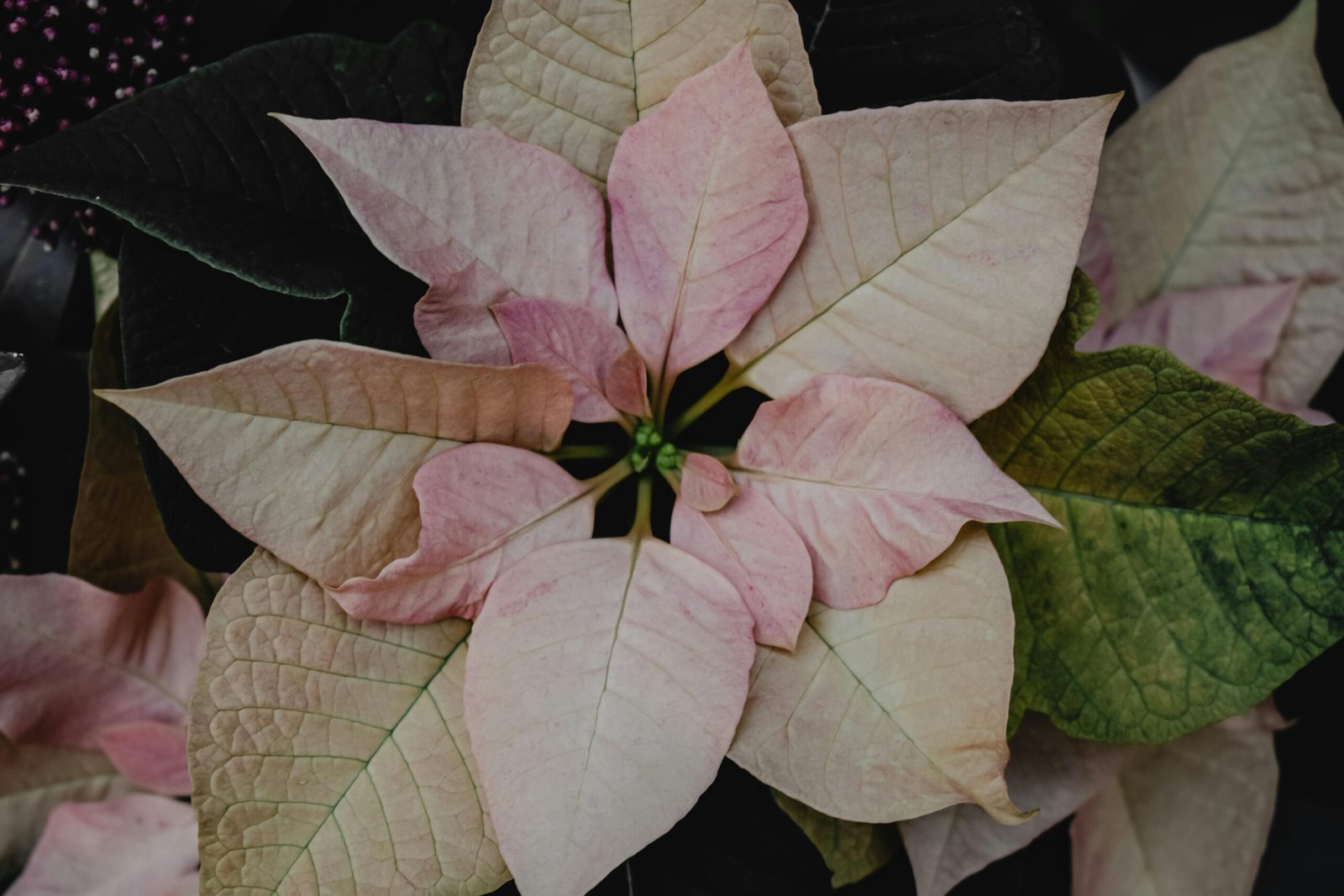
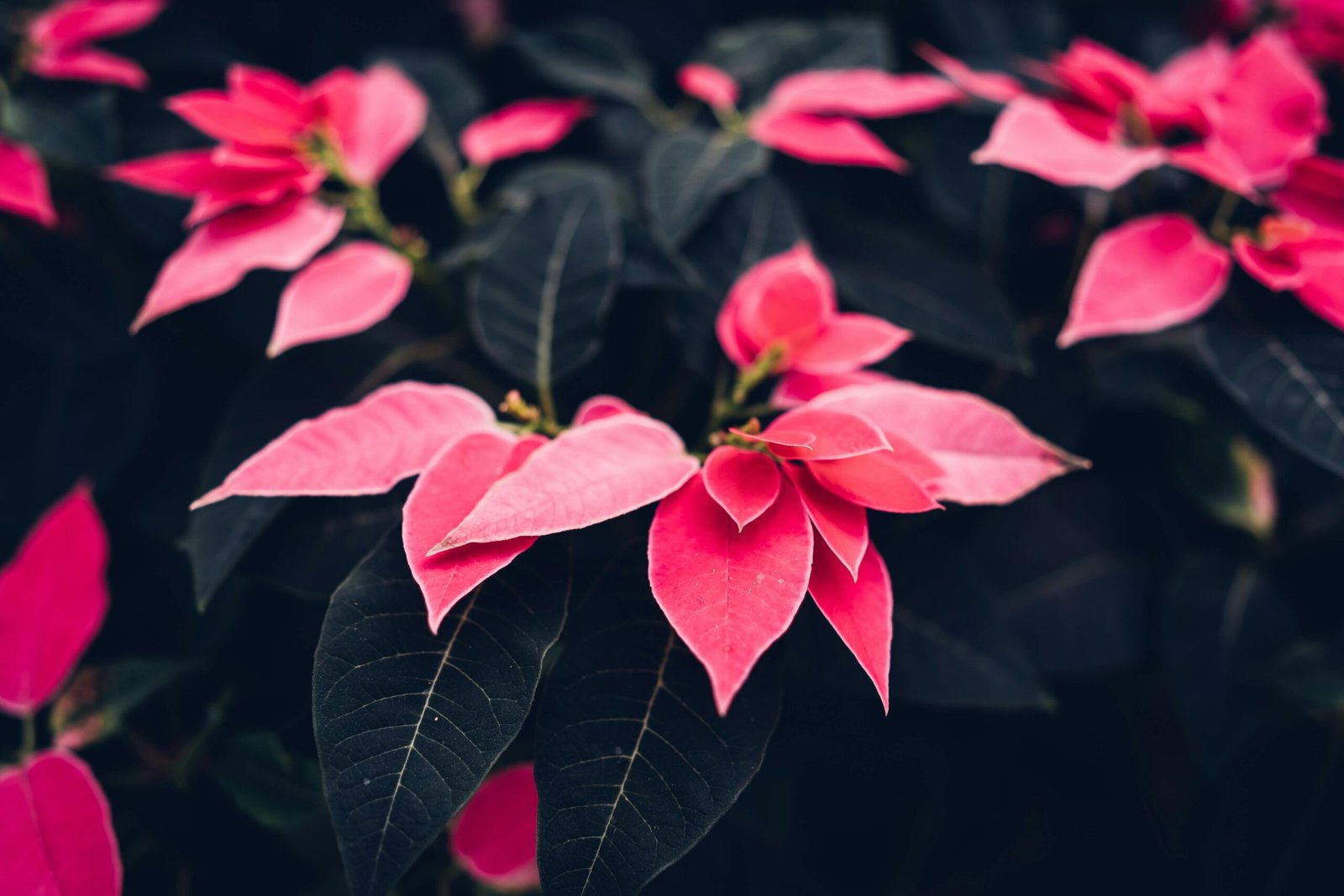
Poinsettia, scientifically known as Euphorbia pulcherrima, belongs to the Euphorbiaceae family and is native to the tropical highlands of Mexico. Its common name Christmas Star refers to the plant’s brightly colored bracts that surround the cluster of true flowers. The species was introduced to cultivation in the early nineteenth century and has since become synonymous with winter decor and holiday displays. Its botanical structure includes broad, pointed leaves and colorful bracts that transition from deep green to vibrant pink or red under shorter daylight hours. This photoperiodic response is central to its identification and seasonal display.
Habitat and Cultivation
In its native environment, the Poinsettia grows as a medium-sized shrub in tropical forests and hillsides. It thrives under partial sunlight with temperatures ranging between 18 and 25 degrees Celsius. For successful cultivation, it is essential to replicate these conditions. The plant prefers well-draining loam that remains moist but not saturated. Overwatering can lead to root rot, while dryness can cause leaf drop. Providing bright, indirect light and steady humidity allows the plant to develop strong stems and vivid bracts. In outdoor tropical gardens, Poinsettia can grow as a perennial shrub, whereas in temperate climates it is often cultivated as a seasonal potted plant.
Growth, Size, and Structure
Poinsettia is a woody shrub that can reach up to three meters in height in its natural habitat. In containers, it typically remains between half a meter and one meter tall. Its growth habit is upright, with a moderate branching pattern that gives it a full appearance. The colorful bracts, which are modified leaves, form near the shoot tips during the winter months when daylight hours are shorter. Beneath these bracts are the small yellow true flowers, which contribute to pollination. The leaves are broad and slightly serrated, providing a textural contrast to the smooth, colored bracts. The plant’s natural rhythm follows a dormant period in late spring before new growth begins again with longer days.
Care and Maintenance
To maintain a healthy Poinsettia, attention to temperature and watering is vital. The plant should be kept in bright, indirect sunlight and protected from cold drafts. Water when the top layer of soil becomes slightly dry, ensuring good drainage at all times. During the growing season, apply a balanced liquid fertilizer every few weeks to support leaf and bract development. Pruning after the blooming season encourages bushier growth and a compact shape. When overwintering, reduce watering and keep the plant in a warm, stable environment. It can be sensitive to low humidity, so occasional misting is beneficial. Poinsettias may attract whiteflies or aphids, which can be managed with gentle organic treatments.
Propagation and Uses
Propagation of Poinsettia is commonly done through stem cuttings taken in late spring or early summer. Cuttings root well in moist, warm conditions when treated with rooting hormone. This method allows gardeners to preserve desirable color variations or compact forms. In landscaping and design, Poinsettia serves as both a festive feature and a year-round ornamental shrub in warm regions. Its pink varieties have gained particular popularity for softer, pastel-themed gardens and interior decor. The plant’s cultural significance as a symbol of celebration adds to its appeal, and with proper care it can provide years of vibrant color and structure in any tropical or subtropical setting.
Gallery