Desert Rose
Adenium obesum
Plant Information
- 🏷️Common Names: Array
- 💧Water Needs: Low
- ☀️Sunlight: Full Sun
- 🌱Soil Type: Sandy well-drained
- 🌿Propagation: Stem cuttings or seeds in well-drained sandy soil.
- 🪴Care Tips: Water sparingly and allow soil to dry fully between waterings. Provide bright light and good air circulation.
Identification and Origin
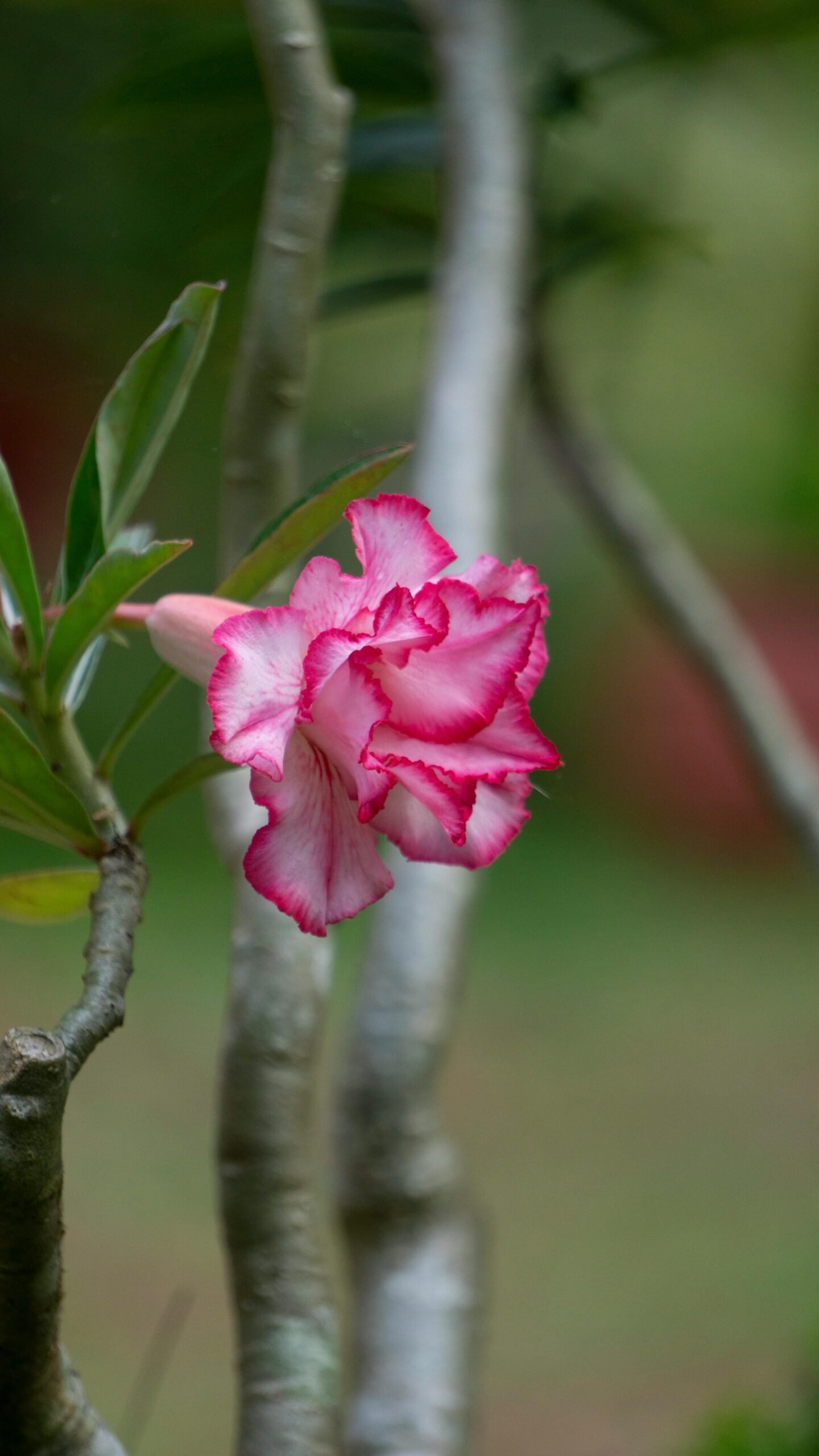
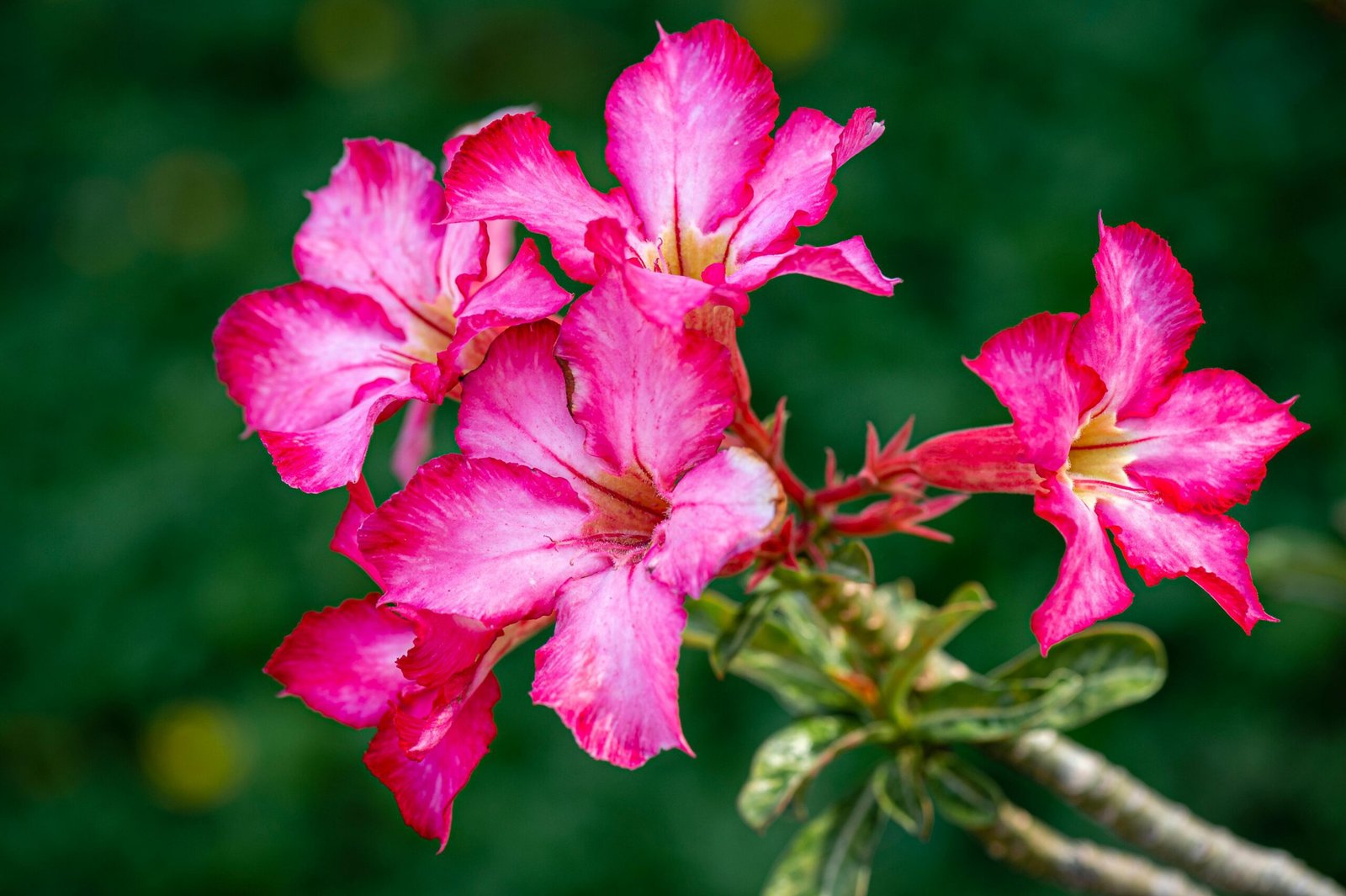
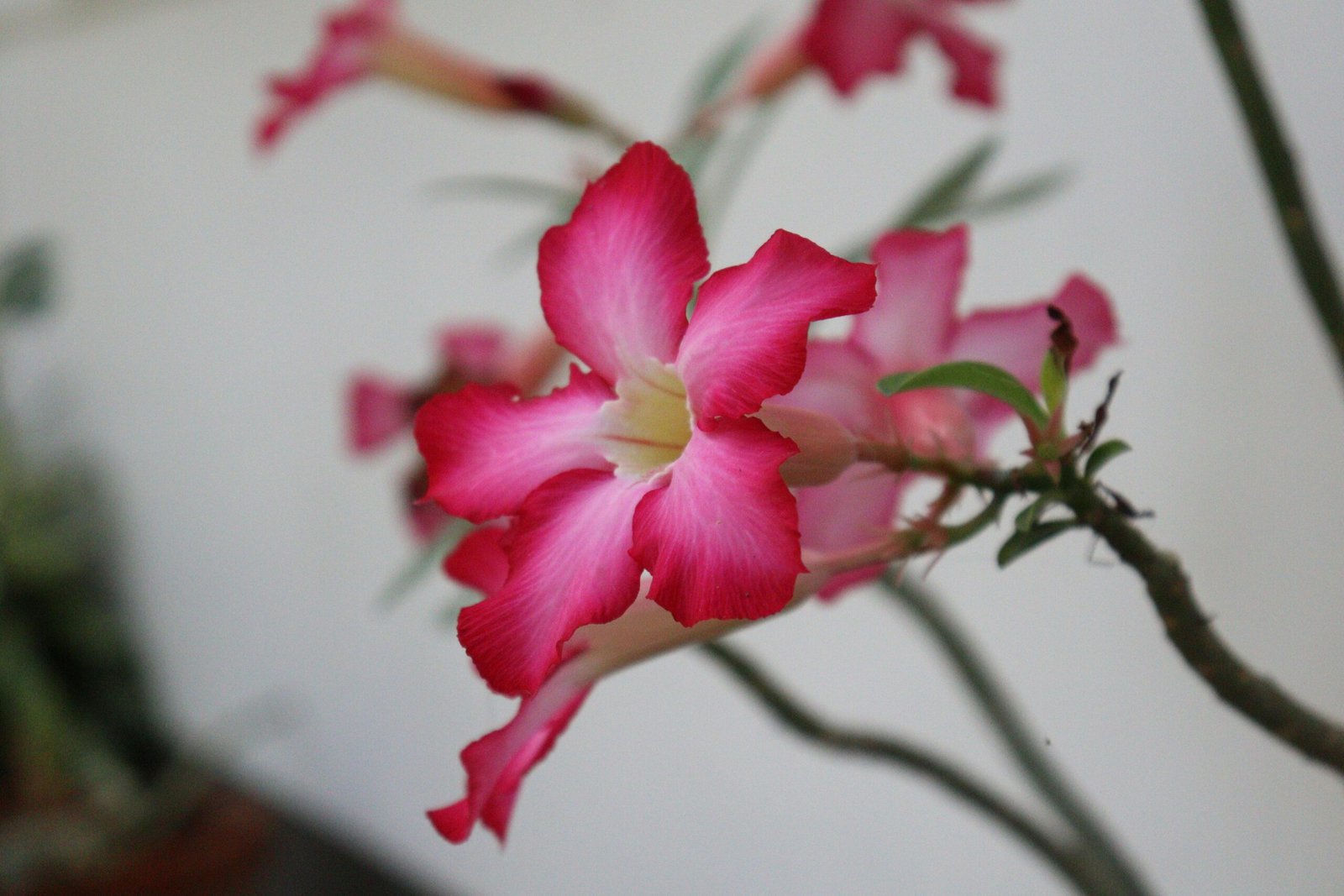
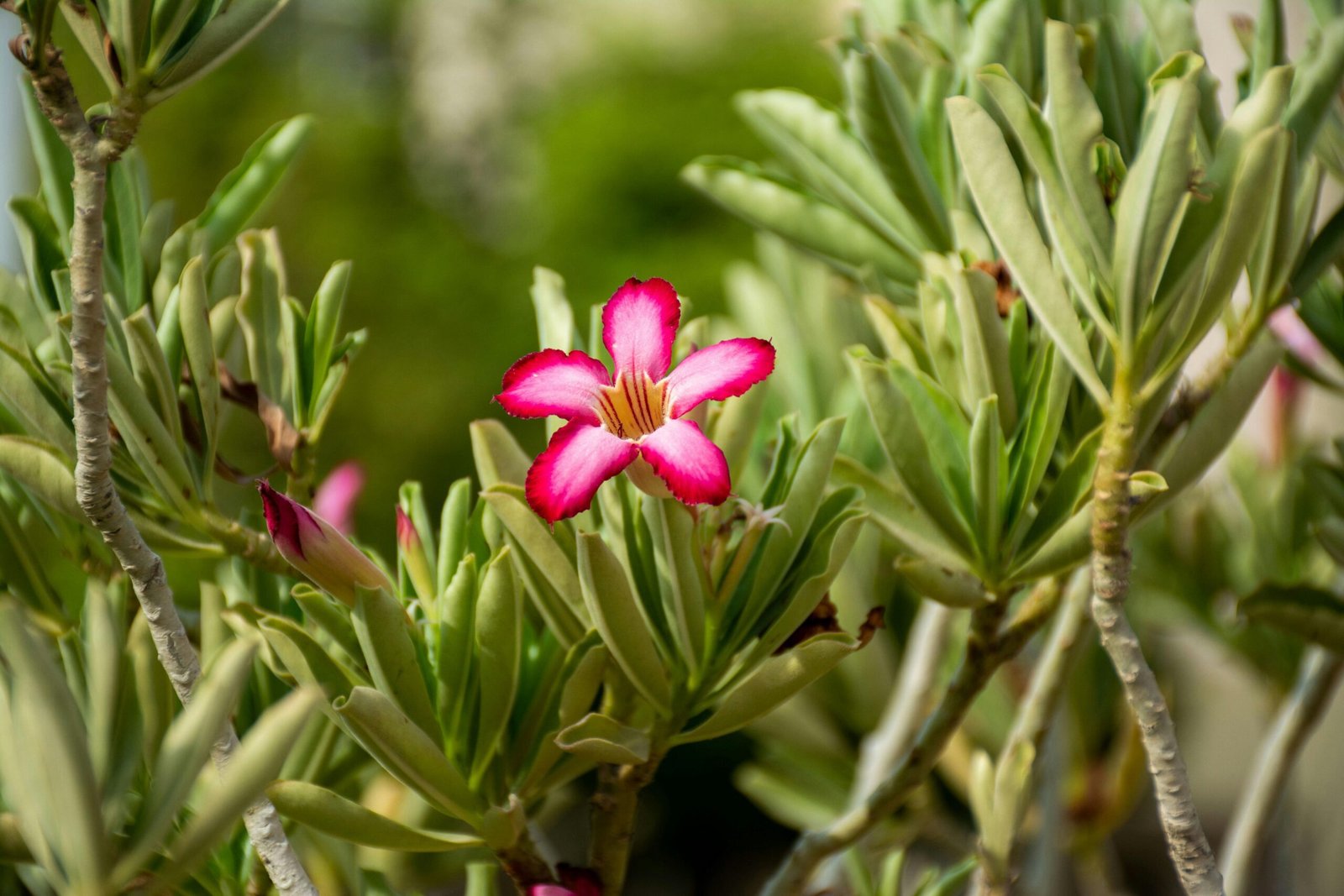
Adenium obesum belongs to the Apocynaceae family. It grows naturally in semi-arid regions where it endures intense sunlight and limited rainfall. Its thick caudex stores water, allowing the plant to survive extended dry periods. The Desert Rose produces funnel-shaped flowers in shades of pink and red that contrast with its smooth gray-green bark. Each flower has five rounded petals and a central white throat. The plant’s overall form resembles a bonsai when cultivated in pots, making it popular with collectors.
Habitat and Cultivation
In its native range, the Desert Rose grows in rocky soils with high drainage. For cultivation, it requires similar conditions: full sun, sandy soil, and sparse watering. It prefers temperatures above twenty degrees Celsius and must be protected from frost. Watering should be minimal during its dormancy period in winter. Overwatering is the most common cause of decline. Container-grown plants benefit from cactus or succulent potting mix with added perlite or coarse sand for aeration.
Growth, Size, and Structure
The Desert Rose can grow up to three meters tall in nature but remains compact in containers, typically under one meter. Its growth is slow to moderate. The thickened stem base, or caudex, develops over time and becomes an ornamental feature. Its glossy leaves appear in clusters at branch tips, falling off during dry seasons. The bright pink flowers emerge in cycles during warm months and can last for several weeks under ideal care.
Care and Maintenance
Desert Rose thrives in full sun with minimal intervention. It should be watered deeply but infrequently, allowing the soil to dry completely between sessions. Fertilizing once a month during the growing season promotes flowering. Pruning can shape the plant and encourage branching. It is important to avoid cold exposure and ensure excellent drainage to prevent rot. In tropical and subtropical zones, it can remain outdoors year-round; in cooler regions, it should be brought inside during cold spells.
Propagation and Uses
Propagation is best achieved through stem cuttings or seeds. Cuttings root quickly in sandy, well-drained media. Mature specimens can also be grafted to preserve flower color variations. Desert Rose is widely used as a feature plant in xeriscapes, rock gardens, and decorative pots. Its sculptural form and long-lasting blooms add artistic character to modern gardens. With age, the plant develops unique shapes that reflect its environment, making each specimen distinctive and highly collectible.
Gallery